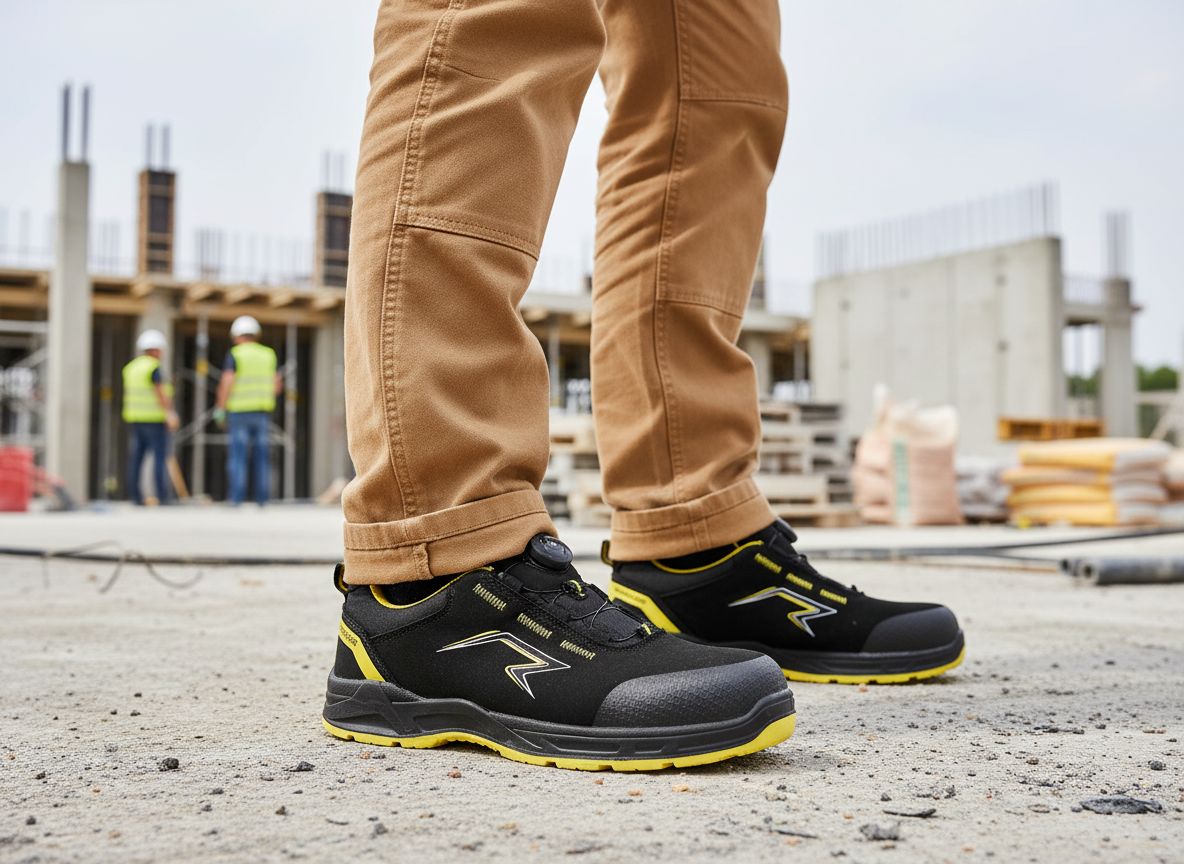
Safety shoes have long ceased to be just durable. Today, new requirements are placed on it: it must be comfortable, lightweight, stylish, and at the same time not lose its main function—to protect. This is especially true in countries with extreme climates, such as the UAE, where every shift is not only work but also a struggle against the heat. And in this struggle, every gram counts.
Why choosing the right socks is so important
The toe cap is the foundation of all protection for your toes. However, it is often the heaviest element in footwear. This means that your choice of toe cap directly affects the overall weight, convenience, and comfort during long shifts. In the Emirates, where temperatures can exceed 45°C, it is inappropriate to wear models that overload the foot.
Aluminum toe caps are lightweight but conduct heat. They are comfortable in moderate climates, but in the UAE they can be a real trap: they heat up from the asphalt, burn your feet, and cause them to sweat more, which can lead to the development of fungus and other foot diseases. Composite insoles are not only lighter, but also thermally insulating, do not create hot spots in shoes, do not conduct electricity, and remain flexible.
Why choose composite?
More and more professionals working in construction, logistics, and industry are choosing work shoes with composite protection. For them, it is not only certificates and impact resistance that are important, but also comfort in real-life conditions. If the shoes do not transfer excess ambient heat to the feet, they will, on the contrary, dissipate it outside. And in the UAE, this is critical.
That is why professional workers often ask for lightweight safety shoes in the UAE — footwear that combines lightness, durability, and adaptation to hot climates. And at the heart of this request is the choice of sole: composite wins out thanks to its technological sophistication and well-thought-out ergonomics.
Protective effect during shift
This type of footwear is easier to wear all day long. It does not pull the foot down, cause irritation from heat, make noise, or feel like an iron box on the foot. Moreover, it makes steps softer, distributes pressure, and reduces the load on the foot and spine.
It is also important that such footwear does not require any getting used to. It immediately feels lighter, fits better on the foot, and does not rub — especially if anatomical features are taken into account and modern moisture-wicking materials are used. Employees simply put them on and start their shift without fear of discomfort.
For whom is this particularly important?
For those who work outdoors, in logistics, on construction sites, or in security. In the UAE, overheating of the feet can lead not only to fatigue, but also to dehydration, headaches, and reduced concentration. Proper work footwear is not only a matter of comfort, but also of safety.
Advantages of composite socks
- Does not conduct heat or electricity. More comfortable and safer in hot weather.
- Lighter than aluminum and steel, reduces the overall weight of the shoe.
- Not susceptible to corrosion, does not require protection from moisture.
- Retains its shape even after prolonged use.
- Suitable for employees passing through metal detectors.
What to consider when buying
- Sock materials. Choose composite if comfort in hot weather is important
- Certification. Proven protection with minimal weight
- Weight of the pair — the manufacturer must state it honestly
- Design. Ventilation, anatomical insole, and flexible sole
When lightness is your tool
Lightness is not convenience, it is a tool. It is an opportunity to conserve energy until the end of the shift, reducing the risk of errors and fatigue. Composite toe caps are a step forward in safety without compromise.
This is precisely the approach taken by the specialists at TALAN, who create footwear that meets the requirements of today’s professionals. Their models with composite protection are the result of engineering, experience, and an understanding of real-world conditions. And in the UAE, this is particularly important.