The demand for professional signage is rising as businesses rely on visual branding to stand out in competitive markets. If you’re exploring how to start a sign business, the opportunity is real, even without prior experience. What matters most is choosing the right equipment, understanding production workflows, and building practical skills from the start.
This guide provides a roadmap covering essential machines, startup requirements, costs, and realistic profit potential. HighTech Industry Group introduces professional sign-making solutions designed to help new entrepreneurs launch efficiently, scale confidently, and build a sustainable signage business.
What Would You Need to Start a Sign Business?
If you’re researching how to start a sign business, the essentials are straightforward: practical skills, a clear plan, the right equipment, legal setup, and a strong online presence. Each step builds the foundation for a professional and profitable operation. Below is a breakdown of what you need to launch successfully.
Develop a Professional Skill Set
You don’t need years of experience to enter the signage industry, but you do need core production and design skills. Learning how different materials behave, how machines operate, and how signage is installed helps you deliver consistent quality.
Key skills include:
- Basic graphic design and layout principles
- Material knowledge (acrylic, aluminum, PVC, vinyl)
- Understanding cutting, engraving, and bending processes
- File preparation for production machines
- Installation and finishing techniques
Many entrepreneurs starting a sign company begin with simple projects such as indoor signs or promotional displays, then expand into advanced products like channel letters and illuminated signage.
Plan Your Business
Planning your business is one of the most important steps in starting a sign company successfully. A clear business plan helps you define your target market, choose the types of signs to produce, estimate costs, and set realistic pricing strategies. You should also determine your production workflow, turnaround times, and growth strategy from the beginning. Having a structured plan reduces risk, improves decision-making, and creates a roadmap for scaling as demand grows.
Purchase Your Sign Equipment
Choosing the right equipment directly affects your production quality and profitability. When starting a sign making business, focus on essential machines that allow you to produce professional signage consistently. This typically includes channel letter bending machines, CNC routers, laser systems, and starter production tools. Investing in reliable sign business equipment helps reduce material waste, improve accuracy, and ensure consistent results. As your business grows, you can expand your equipment to handle more advanced projects and higher production volumes
Legalize Your Business and Set Up Accounting
Register your business according to local regulations and establish a proper financial structure from day one.
Important steps include:
- Business registration and licensing
- Tax setup and reporting structure
- Insurance coverage
- Invoicing and bookkeeping systems
A professional legal and financial setup builds credibility and prepares your operation for long-term growth.
Establish a Web Presence
Building a strong online presence is essential for attracting customers and generating consistent leads. Most businesses search online first when looking for signage services, so having a professional website helps showcase your services, portfolio, and expertise. You should also focus on local SEO, business listings, and customer reviews to improve visibility. Maintaining an active digital presence allows you to build credibility and support long-term growth.
What Equipment Do You Need to Start a Sign Business?
Choosing the right equipment is the foundation of building an efficient and profitable sign shop. When learning how to start a sign business, your machines determine production quality, speed, and the types of services you can offer.
Below are the core machines that allow beginners to produce professional signage, including channel letters, engraved signs, and custom branding products.
Channel Letter Bending Machine
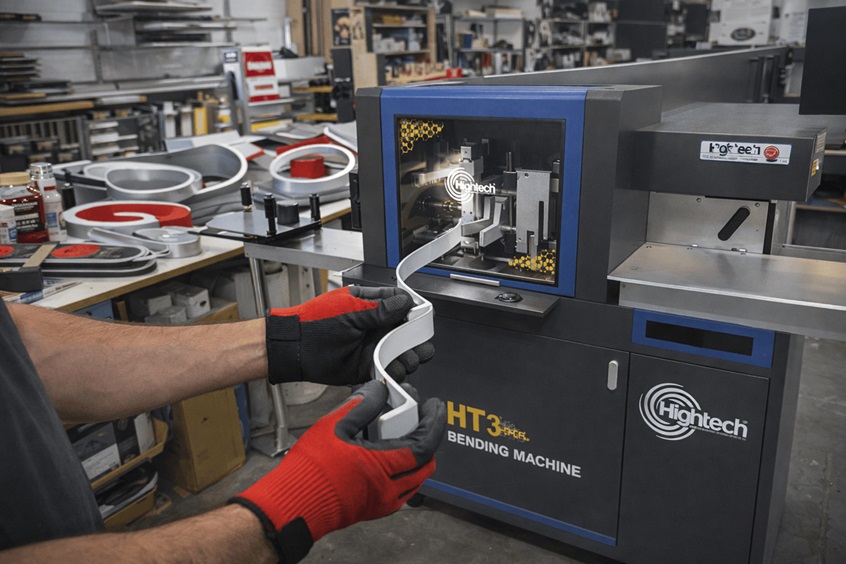
A channel letter bending machine is one of the most profitable investments in modern signage production. Channel letters are widely used for storefront signs, commercial branding, and illuminated business signage, making them a high-demand product in the market.
This machine automatically bends aluminum coils into precise letter shapes based on digital design files. It significantly reduces manual labor while improving accuracy and consistency in production.
Key benefits:
- Produces high-value illuminated signage
- Automates letter shaping and fabrication
- Supports B2B orders from contractors and sign shops
- Increases profit margins with premium products
GSB-01 — Garage Sign Builder Kit HT1
The GSB-01 Garage Sign Builder Kit HT1 is designed as a complete entry solution for beginners starting a sign making business from home. It combines essential tools and production components into a structured setup that helps new business owners begin operations quickly without complex installation or large investments.
This kit supports core signage tasks such as material preparation, basic fabrication, and assembly workflow. It is ideal for producing small commercial signs, indoor branding elements, and early-stage client projects while maintaining professional standards.
Desktop CNC Router (6040 / 6090)
A desktop CNC router allows precise cutting, engraving, and shaping of materials such as acrylic, PVC, wood, and aluminum composites. Models like 6040 or 6090 are compact enough for home workshops but powerful enough for commercial sign production.
This machine enables businesses to create dimensional letters, engraved panels, decorative signage, and custom branding elements with high accuracy.
Desktop CO₂ Laser 7050
A desktop CO₂ laser 7050 is used for high-precision engraving and cutting of non-metal materials such as acrylic, wood, leather, and plastics. It is widely used for detailed signage, decorative branding elements, and custom business products.
Laser technology produces clean edges, intricate designs, and fast production speeds, making it ideal for custom orders and personalized signage services.
Main advantages:
- Extremely precise engraving and cutting
- Smooth, clean finishing with minimal post-processing
- Ideal for custom and detailed designs
- Expands product range and service value
How Much Does It Cost to Start a Sign Business?
Starting a sign company requires a flexible budget depending on equipment, capacity, and goals. A home-based setup keeps initial costs manageable while still allowing professional production. Most investment goes toward machines, materials, and workspace setup. Starting small and scaling gradually helps control risk while building steady revenue and experience.
Estimated Startup Cost Overview
| Category | Estimated Cost Range | Purpose |
| Basic Equipment | $3,000 — $15,000 | Vinyl cutter, starter tools, basic production setup |
| Advanced Machines | $8,000 — $40,000+ | CNC router, laser cutter, channel letter bender |
| Computer & Design Software | $1,000 — $3,000 | Design preparation, file management, workflow control |
| Materials & Supplies | $1,000 — $5,000 | Acrylic, aluminum, vinyl, LEDs, sign blanks |
| Workspace Setup | $500 — $3,000 | Lighting, storage, work tables, ventilation |
| Business Registration & Legal | $200 — $1,000 | Licensing, permits, accounting setup |
Typical home-based startup: $5,000 — $25,000
Full production setup: $30,000+
How Profitable Can a Sign Shop Be?
With an average startup investment of $10,000, our complete channel letter production line can realistically pay for itself in just 3–6 months. A typical 20″ channel letter project, priced at the standard industry rate of 2.5× material cost, generates approximately $300–$1,000+ net profit per job, depending on size and complexity.
That means completing only 5–8 projects per month is enough to fully recover your initial equipment investment. After that point, every additional project becomes pure profit. With low overhead, high-margin products, and consistent B2B demand, even a small workshop can generate strong monthly cash flow and quickly scale into a sustainable, full-service signage business.